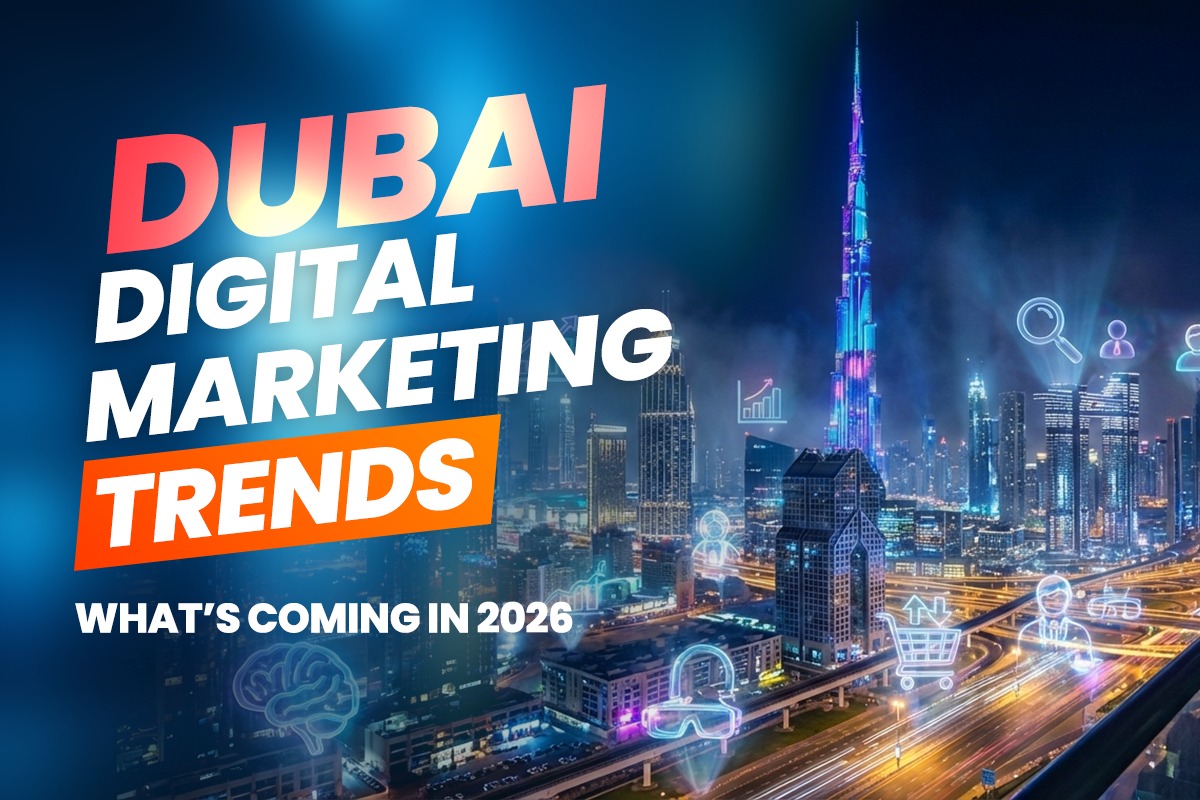
Dubai’s tech-driven economy articulates that its consumers are nearly 100% connected. In fact, UAE government data show that active internet users account for 99% of the population, and the number of social media accounts exceeds the total population.
This hyper-connected environment makes digital marketing the default channel from luxury retail to tourism. Digital marketing trends in Dubai will be shaped by this widespread connectivity.
Here’s the reality of Dubai’s digital landscape as stated by Datareportal,
Almost everyone is online! Roughly 99% of Emiratis use the internet, and mobile connectivity is nearly universal, with more than 21.9 million mobile connections supported by widespread 3G, 4G, and 5G coverage.
11.3 million active social accounts, which is more than 100% of the population, and Emiratis spend about 2.3 hours a day on social networks.
By 2026, the UAE market is expected to be worth about $17 billion, thanks to sales from both local and foreign sellers.
The numbers show what’s going on in the world. Marketing trends in UAE are based on the idea that technology comes first. People want to be able to connect with online content right away, see content in English and Arabic, and be able to use their phones without any issues.
We’re going to talk about the new business trends in Dubai that need to be followed in 2026. These will include everything from cutting-edge technology to new ways to show information.
1. Personalization and automation in AI
AI (artificial intelligence) is changing digital marketing all over the world, and Dubai is no different. This means a lot more automation and programs that are very specific to each person. Dubai’s marketing teams use AI tools to look at huge amounts of customer data and serve them material that is tailored to their needs.
Changes that stand out include,
Predictive Analytics
Marketers build AI-driven profiles to predict which products or content each segment will like, improving click-through rates and ROI.
Virtual assistants and chatbots
AI chatbots that speak Arabic and English as their first language answer customer questions 24 hours a day, seven days a week. This makes replies faster and makes customers happier.
Dynamic Ads and DCO
Dynamic Creative Optimization (DCO) changes the look or meaning of an ad in real time. For example, an online travel agent could use AI to change banner images so that users from the UAE see desert tours and users from Europe see beach tours.
2. Voice search, local SEO, and marketing in more than one language
Voice search and local optimization are very important in Dubai because the people there speak many languages and move around a lot. Many people in the UAE use personal assistants like Siri, Google Assistant, and Alexa, which can speak both Arabic and English.
In fact, iValuePlus notes that “the rise of Arabic-language smart assistant means voice search is growing in Dubai,” and brands must optimize for natural, conversational queries.
Implications for marketers
Voice-Friendly Content
Websites and FAQs should be written in full-question formats (e.g. What is the best dessert shop in Downtown Dubai?) to rank for voice queries.
Near-Me and Local SEO
Approximately 46% of UAE Google searches have local intent, and 76% of users visit a store within 24 hours of a local search, as highlighted by Titan Digital Marketing.
Marketers must keep Google Business Profiles up-to-date (in both English and Arabic) and target near me keywords with schema markup.
Multilingual Content
In a diverse market, creating bilingual (Arabic + English) or even multilingual content gives a competitive edge. For example, leading Dubai firms now produce parallel blogs, landing pages, and ads in Arabic and English to capture both locals and expats.
These tactics reflect broader marketing trends in UAE with a focus on regional relevance. Brands that tailor SEO and content to local culture and languages will rank higher.
By 2026, near-universal mobile use means voice and local search are standard channels; Dubai marketers are already preparing for AI-driven Answer Engine Optimization that delivers direct answers to spoken queries.
3. Video-First Content and Social Commerce
Video continues to dominate engagement in Dubai. Short-form clips (Instagram Reels, YouTube Shorts, TikToks) have become central to discovery and e-commerce. iValuePlus reports that video content now accounts for 70% of digital ad engagement in the UAE. Globally, 89% of businesses use video in their marketing, and video posts drive over 157% more organic traffic.
Expect Dubai brands to invest heavily in video to catch this wave.
Short-Form and Live Video
Dubai’s young and social-savvy audience loves brief, authentic clips. Brands will maintain always-on Reels/TikTok channels with localized hooks (e.g. quick tours of Dubai landmarks, product demos). Live shopping events (streamed sales) are also on the rise.
Interactive Formats
Polls, quizzes, and AR filters (e.g. Snapchat/Instagram masks) boost engagement. Marketers can integrate these into campaigns: for example, a cosmetics brand might use an Instagram filter letting users virtually try on makeup in real time.
Social Commerce Integration
Social platforms have become e-commerce portals. Instagram Shops, TikTok Catalogs, and even Facebook Marketplace let UAE consumers buy directly within the app.
A 2023 report notes that social commerce spending in the UAE is accelerating, with consumers increasingly checkout out on social. By 2026, we expect social channels to account for a significant slice of online sales in Dubai’s markets. (For reference, UAE e-commerce is set to hit $17B by 2026, and a growing portion will come via social ads with buy buttons.)
Videos and social ads will increasingly feed into these metrics. In practice, Dubai marketers are now shifting budgets; 40% of influencer or ad spend is being allocated to short video formats. Early adopters already report higher conversion rates from video.
These outcomes underscore how digital marketing trends in Dubai center on immersive, visual storytelling rather than static posts.
4. Influencers, Communities, and Brand Purpose
Dubai’s consumers, specifically Millennials and Gen Z, value authenticity and values-based branding. Marketing is no longer just about sales; it’s about community and trust. As a result, influencer and community marketing take on new forms:
Rise of Micro/Nano-Influencers
Long gone are the days of celebrity-only endorsements. In the UAE, 58% of consumers say they trust micro-influencers more than celebrities. Smaller creators (with 1K–100K followers) yield engagement rates of 6–8%, well above global averages, as stated by World Economic Magazine.
Dubai brands are capitalizing on this by engaging many niche UAE-based influencers across diverse communities.
Brand Communities
Beyond paid influencers, companies are building their own communities. Many Dubai brands host forums, social groups (e.g. Facebook or WhatsApp groups), and encourage user-generated content.
5. Privacy of data, rules, and first-party data
Dubai’s government has made it easier to advertise and collect data, which is changing how businesses market themselves. The UAE’s 2022 Personal Data Protection Law says that businesses must be open about how they use user data.
By 2026, marketers in the UAE are getting ready for this:
Since third-party cookies are being phased out, companies in Dubai are putting their money into data that they own. Getting texts, information from loyalty programs, and opt-in data (zero-party data) will help with personalization without putting people’s privacy at risk. Marketers are collecting records of what customers want and information they have permitted to use in campaigns.
As Dubai puts a lot of stress on digital ethics, such as the AI Ethics guidelines, it encourages marketers to be responsible. Expect more disclosures (e.g. clearly marking sponsored content) and stricter adherence to privacy (getting consent for WhatsApp marketing, etc.).
In fact, agencies advise clients to map all privacy preferences and review messaging to stay compliant.
Secure Omnichannel
With everyone mobile (99% internet use), brands are unifying channels safely.
For example, linking website, social, and CRM systems with secure APIs means a customer support query on WhatsApp auto-updates the CRM. These secure omnichannel integrations are becoming a standard practice.
These trends align with marketing trends in UAE that balance innovation with regulation.
Create Arabic and English content everywhere; bilingual strategy is no longer optional. Brands that speak the customer’s language will convert more visitors.
Making sure your business in Dubai is ready for the future
The digital market in Dubai will be very tough by 2026, and business as usual won’t work. Follow all of these trends if you want your business to do well. At every step, AI should be used.
Experiences should be mobile-first and Arabic-friendly. Money should be spent on video and artists. Trust should be built through data ethics and values. People who live in Dubai, who are a mix of locals and tourists, like marketing that is clear, up-to-date, and respectful of their culture.
In 2026, digital marketing trends in Dubai will favor speed and adaptability. Use predictive tools, try out new methods (like AR/VR or WhatsApp commerce), and make changes right away to reach your goal.
Marketing trends in UAE show that the company that adapts material to local needs and makes good use of data will gain market share. In the real world, this means spending money right now on tools that use AI, local SEO, and videos. It’s also important to have partnerships.
For example, if you work with a digital company in Dubai, you can speed up the process of putting these trends into action by getting access to information about the area.
Personalization, engaging experiences, and content that is sensitive to different cultures are the things that will make digital marketing trends in Dubai what it is. This information will help brands connect with tech-savvy people in Dubai in a real way.
It will also help brands follow the government’s plans for a smart economy. The future is digital – and those who adapt will lead the way into 2026 and beyond.