SEO didn’t collapse, it matured!
What used to be a game of keywords, backlinks, and clever shortcuts has slowly turned into something closer to reputation, usefulness, and trust. Google didn’t announce this shift loudly. It simply updated its systems again and again until low-effort strategies stopped working.
The future of SEO lies at the intersection of audience value and Google ranking signals, where content quality, trust, and experience work together with measurable signals.

At Blue Tangerine, we see this daily. Websites that focus on finding quick fixes rarely grow. The ones that invest in relevance, clarity, and usefulness consistently outperform. That is not an opinion. It is supported directly by Google’s own documentation and independent industry research.
How Google Actually Thinks About Rankings Today
Google does not rely on a single algorithm. Despite the myths, Google has been unusually transparent about how search works.
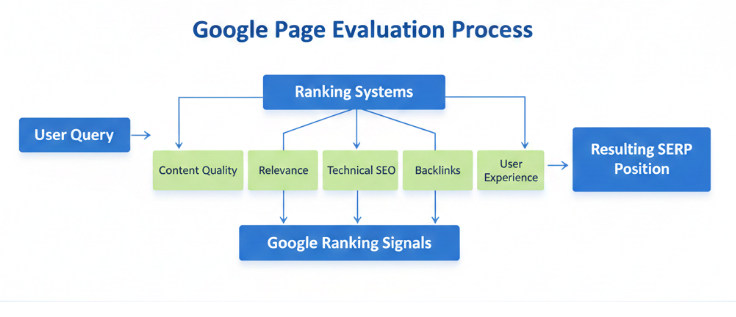
According to Google Search Central’s official documentation, rankings are produced by multiple automated systems that work together to interpret search intent and evaluate pages based on relevance, quality, usability, and context. These systems rely on a wide range of inputs, commonly referred to as Google ranking factors, but they do not operate as a checklist.
What’s important here is intent. Google has made it clear that its systems are meant to reward content that is made for people, not content that is only made to trick search engines.
Google confirmed in a 2024 statement shared by Search Engine Journal that its ranking systems are set to show material that feels helpful, natural, and really written for people to read.
This is often boiled down to “do X, and you’ll rank,” but that way of thinking doesn’t work anymore. These days, search depends on Google’s ranking factors working together, not separately.
In other words, SEO is no longer about chasing isolated Google ranking factors. It’s about alignment.
Content Is No Longer “King”, It’s the Entire Kingdom
If there is one area where Google, researchers, and practitioners all agree, it is content quality.
Every credible study still points to content quality as the strongest differentiator. Backlinko’s large-scale analysis of Google search results shows that pages ranking on page one consistently demonstrate depth, clarity, and relevance. Thin pages simply do not survive.
This is where many businesses go wrong. They hear “content is important” and respond with volume. More blogs, more pages, and more keywords. What Google actually rewards is usefulness.
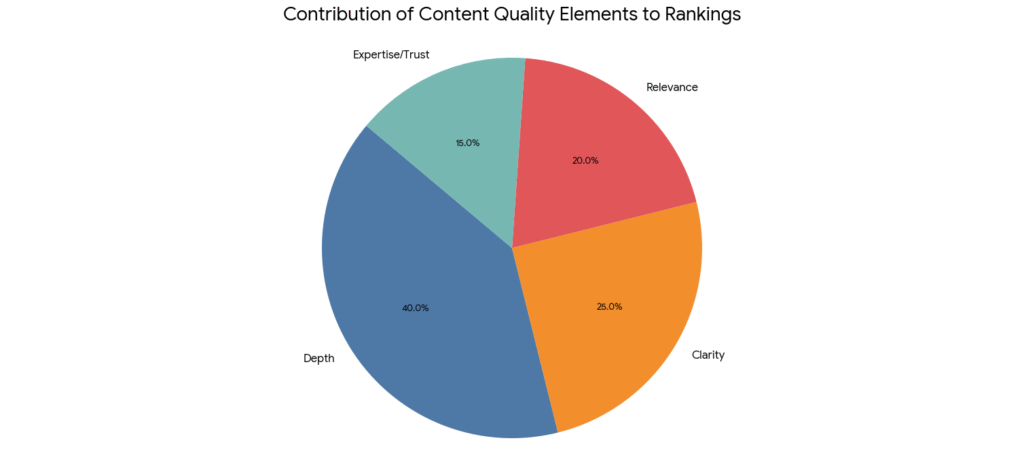
From Blue Tangerine’s perspective, we evaluate content against four questions:
- Does it directly answer the search intent?
- Is it written by someone who understands the topic?
- Would a real user trust this information?
- Does it offer a special requirement that you can’t obtain anywhere else?
Similar to these are the SEO ranking factors used today, specially Google’s focus on knowledge, expertise, authority, and trust. This is not just an idea. This framework is supported by Google’s quality rater standards, adhering to websites that are about business, money, or services.
What Links, Authority, and Digital Reputation Mean To You?
It’s always up for question, but backlinks are still important. Both Analytify and Backlinko agree that links from trustworthy and related websites are still a big part of figuring out reputation.
However, Google now evaluates context far more carefully. A link from a relevant, respected source carries more value than dozens of unrelated mentions.
These links function as long-term seo ranking signals, reinforcing topical authority rather than artificially inflating popularity.
Google has become exceptionally good at identifying unnatural patterns. Mass link-building tactics that worked years ago now actively harm performance. What performs instead is brand authority built through:
- High-quality editorial mentions
- Genuine PR coverage
- Useful content people naturally reference
From a systems standpoint, these act as reinforcing seo ranking signals, not because Google “likes links”, but because links are evidence of credibility within an ecosystem.
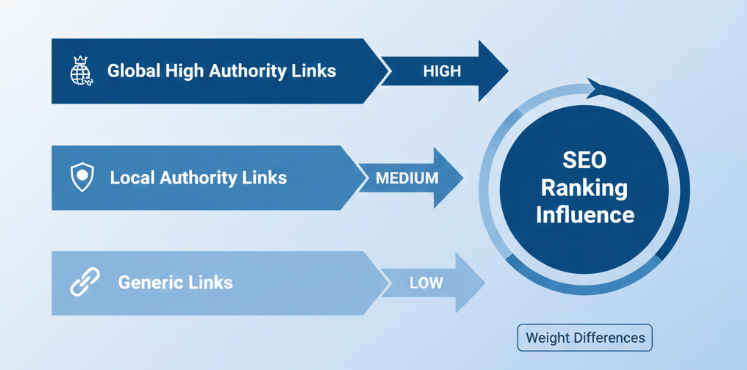
For UAE brands, this often means local relevance matters just as much as global authority. A mention from a respected regional publication can outperform links from global sites with no contextual connection.
This nuance is frequently overlooked, yet it plays directly into how Google ranking factors are interpreted at a regional level.
Regional publications, industry platforms, and locally trusted domains can outperform generic international backlinks when paired with strong on-site content.
Link Value Map
Technical SEO is still important, but not as much as it used to be
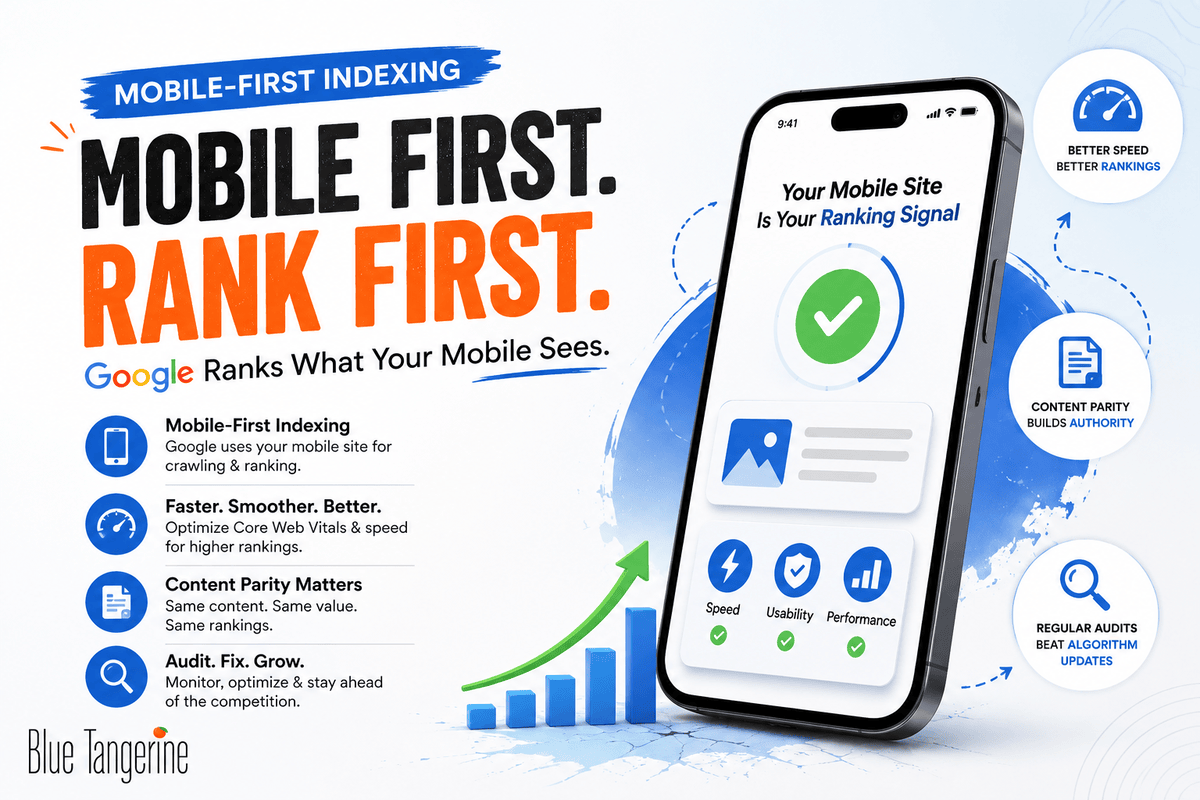
Page speed, mobile friendliness, and site design are all very important. Google has stated that performance metrics like Core Web Vitals are used to judge the user experience of a page. Technical optimization, on the other hand, won’t help weak material on its own.
A lot of the time, websites that are technically great don’t rank because they don’t have enough content. On the other hand, a site with flaws but good information can still do well. The takeaway is balance.
From Google’s perspective, these technical elements support usability. While the documents referenced internal features such as NavBoost and interaction data, multiple expert analyses clarified something critical: the documents did not reveal weighting, usage, or real-world impact. They showed data collection, not ranking confirmation.
Google has consistently stated that it does not use raw click data as a direct ranking factor. What it does use is aggregated feedback to refine relevance at a system level. Treating the leak as a ranking blueprint is a mistake.
The documents referenced internal systems and data points, including interaction-related features such as NavBoost. What they did not reveal was how those data points are weighted, whether they are used in live ranking decisions, or how they interact with other systems.
Multiple expert analyses clarified that the leak demonstrated data collection mechanisms, not ranking logic. Google has consistently stated that it does not use raw click data as a direct ranking factor, a position it has reiterated publicly.
Treating Google ranking signals leaked narratives as a roadmap leads to reactive strategies built on assumptions. Those strategies tend to fail.
From a professional SEO standpoint, obsessing over Google ranking signals leaked narratives, and distracts from what Google has publicly and repeatedly confirmed: “helpful content wins”.
User Behavior, AI Search, and the Next Phase of SEO
AI-powered search experiences are changing how results are displayed, but not what Google values. Danny Sullivan from Google stated clearly that creators do not need to optimize specifically for AI systems. The same principles apply.
This is a common mistake brands do as they are solely writing content for machines. That approach backfires. Google’s systems are trained on human satisfaction, not keyword density.
These indirect SEO ranking signals reinforce the same outcome repeatedly: that the content that frustrates users rarely sustains visibility.
AI did not change SEO fundamentals. It exposed the weak ones.
SEO evolution in the UAE & Why Generic Strategies Fail?
The UAE market is digitally mature and highly competitive. Users compare a lot, switch quickly, and want things to be clear. It’s hard for SEO tactics that use generic content or frameworks that have been copied to work here.
Beneficial plans include:
- Plain language
- Use in the area
- Performance that is mobile first
- Content that takes into account both business and cultural issues
Going after specific Google ranking factors without knowing what your audience wants will only bring you short-term wins at best. For long-term growth, content purpose and user need must be in sync.
How Blue Tangerine Approaches SEO Strategy?
It’s not a checklist or a product at Blue Tangerine when it comes to SEO.
We don’t instantly answer every news story or update about signs getting out on Google’s rankings. Instead, we base our plans on what Google has written by analyzing and syncing with a solid study of your brand/company.
Our holistic approach comes from,
- Purpose-driven content design
- Performance in technology that makes things easier to use
- You don’t get authority by cutting corners; you get it by being useful
- Measurements that are linked to business results
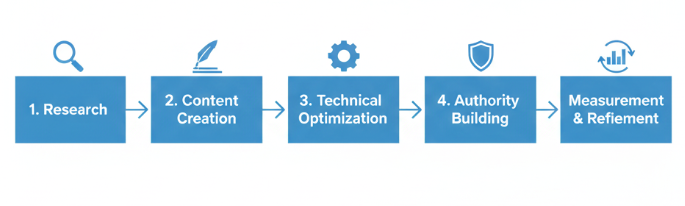
This balance lets ranks grow naturally and stay the same over time, even as algorithms change.
Conclusion
Google’s systems are increasingly aligned with human judgment. If content feels useful, trustworthy, and clearly written, it tends to perform. If it feels engineered, padded, or manipulative, it fades.
That balance between audience value and Google ranking signals is not a trend. It is the direction. The brands that succeed are the ones that stop treating SEO as a technical game and start treating it as communication.
SEO doesn’t make you choose between users and results anymore. Google has removed that conflict.
When you invest in content that genuinely helps people, support it with strong technical foundations, and build authority the right way, you align naturally with how search works today.
If your business is ready to move beyond surface-level optimization and build an SEO strategy that performs consistently in Google, Blue Tangerine’s SEO services are designed for exactly that purpose.
We thoroughly believe in taking no shortcuts. We excel in investing in growth that lasts.